


Recipe by: Gianna Apostolou
These Smyrna-Style Meatballs, known in Greek as Soutzoukakia Smyrneika, are elongated beef meatballs seasoned generously with cumin, garlic, onion, and vinegar. After a brief frying, they finish cooking slowly in a rich tomato sauce flavored with red wine and additional cumin.
This recipe makes approximately 15-18 meatballs and serves about five people as a main course.
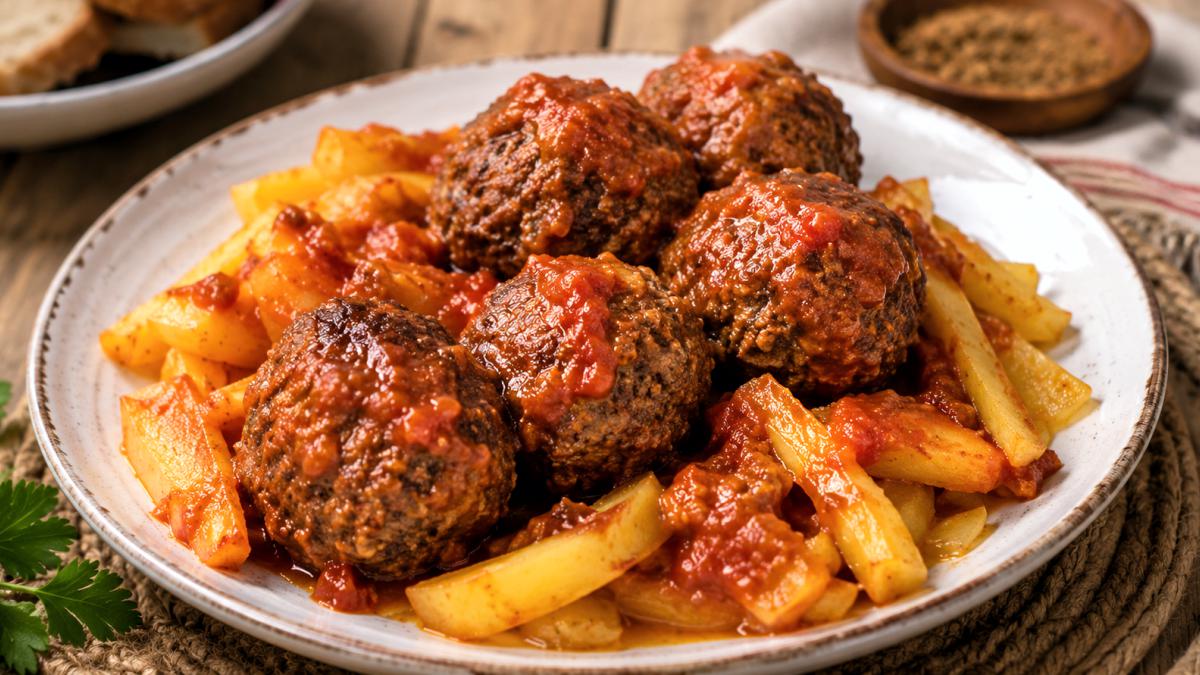

Smyrna-Style Meatballs in Tomato Sauce – Traditional Soutzoukakia
5
servings30
minutes1
hour650
kcal1
hour10
minutesTraditional Soutzoukakia Smyrneika made with cumin-seasoned beef meatballs, briefly fried and simmered in a rich tomato and red wine sauce.
Ingredients
- For the Soutzoukakia
500 g 1.1 lb Ground Beef
1 1 Large Onion, grated
1 1 Garlic clove, crushed
60 ml 1/4 cup Olive oil
3 tbsp 3 tbsp Vinegar
1 tsp 1 tsp Salt
1/2 tsp 1/2 tsp Black Pepper
1 1/2 tsp 1 1/2 tsp Ground cumin
250 ml 1 cup Vegetable oil, for frying
- For the Tomato Sauce
1 1 Large Onion, minced
1-2 1-2 Garlic clove, crushed
2 2 Medium ripe Tomated puréed (about 300 g – 1 1/4 cups)
2 tbsp 2 tbsp Tomato paste
75 ml 1/3 cup Red wine
75 ml 1/3 cup Olive oil
240 ml 1 cup Water
3/4 tsp 3/4 tsp Salt, or to taste
1/2 tsp 1/2 tsp Black Pepper
1 tsp 1 tsp Ground cumin
Recipe directions
- Prepare the Tomato Sauce
- Heat the olive oil in a wide pot over medium heat.
- Add the finely minced or puréed onion.
- Sauté for 5–6 minutes, until softened and beginning to develop some color.
- Add the garlic and stir for approximately 30 seconds, taking care not to let it burn.
- Pour in the red wine.
- Let it boil for 2–3 minutes, until most of the alcohol has evaporated.
- Add the puréed tomatoes, tomato paste, water, salt, black pepper, and cumin.
- Stir well and bring the sauce to a boil.
- Reduce the heat and simmer for approximately 20 minutes, stirring occasionally.
- Prepare the Meatball Mixture
- Add the ground beef, grated onion, garlic, olive oil, vinegar, salt, black pepper, and cumin to a large bowl.
- Knead the mixture thoroughly for 4–5 minutes, until the ingredients are evenly incorporated and the ground beef becomes cohesive.
- When time allows, cover the bowl and refrigerate the mixture for 20–30 minutes so it firms up and becomes easier to shape.
- Shape the Soutzoukakia
- Lightly wet or oil your hands.
- Take portions of the mixture and shape them into narrow, elongated meatballs.
- Continue until you have approximately 15–18 soutzoukakia.
- Fry the Meatballs
- Heat enough vegetable oil in a deep skillet over medium-high heat.
- Fry the meatballs in batches until browned on all sides.
- They do not need to cook completely in the center at this stage.
- Transfer the browned meatballs to a plate lined with paper towels.
- Finish the Soutzoukakia in the Sauce
- Once the tomato sauce has simmered for 20 minutes, carefully arrange the fried meatballs in the pot.
- Spoon some of the sauce over the meatballs.
- Reduce the heat to low.
- Partially cover the pot and simmer for another 30 minutes.
- Carefully turn the meatballs once or twice during cooking.
- The dish is ready when the soutzoukakia are fully cooked in the center and the tomato sauce has thickened.
- Remove the pot from the heat.
- Let the dish rest for 5–10 minutes before serving.
Did you make this recipe?
Tag @georgezolis on Instagram and hashtag it with #georgezolis
Like this recipe?
Follow @gzoliskitchen on Pinterest
Γίνετε μέλος της Ομάδας μας
Ακολουθήστε τις Μαγειρικές Απολαύσεις στο Facebook
What Are Soutzoukakia Smyrneika?
Soutzoukakia Smyrneika are elongated, cumin-seasoned meatballs associated with the culinary traditions of Smyrna, present-day İzmir. The recipe became firmly established in Greek cuisine through Greek communities from Asia Minor.
Their distinctive character comes from the generous use of cumin in both the meat mixture and the tomato sauce. Unlike ordinary round meatballs, soutzoukakia are shaped into narrow cylinders and traditionally fried before being simmered in sauce.
The name is related to their sausage-like elongated shape. Today, Soutzoukakia Smyrneika remain one of the best-known dishes connected with the Greek cuisine of Asia Minor.
Why the Meatballs Are Fried First
Frying develops a browned exterior and helps the soutzoukakia maintain their shape when transferred to the tomato sauce.
They only need to brown at this stage. Fully cooking them during frying could make them drier after the additional 30-minute simmer.
Work in batches rather than crowding the skillet. Adding too many meatballs at once can lower the oil temperature and make them more likely to absorb excess oil.
What to Serve with Soutzoukakia
Soutzoukakia Smyrneika are traditionally served with a starchy accompaniment that absorbs the sauce.
Good options include:
- Steamed white rice
- Mashed potatoes
- French fries
- Orzo
- Spaghetti or another pasta
- Crusty bread
- Bulgur
- Roasted potatoes
A simple green salad, cabbage salad, or tomato and cucumber salad can balance the richness of the dish.
Can You Bake the Meatballs Instead of Frying?
The traditional method in this recipe uses frying, which creates a deeper browned flavor.
For a lighter version, the shaped soutzoukakia can be arranged on an oiled baking tray and baked until browned before being transferred to the sauce.
The flavor and exterior texture will not be identical to the fried version, but the meatballs can still finish cooking successfully in the tomato sauce.
Make-Ahead Instructions
The meat mixture can be prepared several hours in advance and kept covered in the refrigerator.
You can also shape the meatballs ahead of time and refrigerate them on a covered tray until ready to fry.
The entire finished dish can be prepared one day in advance. Like many tomato-based stews, its flavor often becomes more developed after resting overnight.
Reheat gently over low heat, adding a small splash of water if the sauce has thickened too much.
Storage
Allow leftovers to cool before transferring them to an airtight container.
Store in the refrigerator for up to 3 days.
Reheat the soutzoukakia gently in a covered saucepan over low heat until the centers are thoroughly hot. Stir or turn them carefully so they don’t break.
The cooked dish can also be frozen for up to 2 months. For best results, freeze the meatballs together with enough sauce to keep them covered.
Frequently Asked Questions
What is the difference between soutzoukakia and ordinary meatballs?
Soutzoukakia are elongated rather than round and are strongly seasoned with cumin. They are typically browned and then simmered in a tomato-based sauce.
Can I use a mixture of beef and pork?
Yes, although this recipe uses only ground beef. A beef-and-pork blend will produce a slightly richer and often softer meatball.
Do I need to chill the meat mixture?
Chilling is optional but useful. It firms the mixture and makes the elongated meatballs easier to shape.
Why are there no breadcrumbs or eggs?
This particular recipe relies on thorough kneading and chilling to bind the ground beef. Breadcrumbs and eggs are not included in the original ingredient list.
Can I omit the wine?
Yes. Replace it with an equal amount of water or additional tomato liquid. The sauce will have slightly less depth but will still work.
Can I omit the vinegar?
The vinegar is part of the characteristic seasoning of this version. It can be reduced, but omitting it will change the final flavor.
Can I make the sauce with canned tomatoes?
Yes. Use approximately 1¼ cups of crushed or puréed canned tomatoes in place of the fresh tomatoes.
Why did my meatballs break?
The mixture may not have been kneaded sufficiently, it may have been too warm and soft, or the meatballs may have been turned before the exterior browned enough to hold together.
Can I make them without frying?
Yes. Bake or sear them with less oil before transferring them to the sauce, although the finished texture will differ from the traditional fried version.