


This Greek Feta Cheese Pie with Rustic Phyllo is the kind of tiropita that earns a permanent spot in your recipe collection. A generous, deeply savory filling of crumbled feta, creamy yogurt, cream cheese, eggs, and smoked paprika is nestled between layers of thick, rustic-style phyllo dough, then topped with egg-dipped, crinkled sheets that bake into a spectacularly golden, crunchy crown.
Every slice is juicy and rich on the inside, shatteringly crisp on the outside – the ultimate version of one of Greece’s most beloved comfort foods. Whether you serve it warm from the oven for a family dinner or at room temperature as part of a spread, this pie never fails to impress.
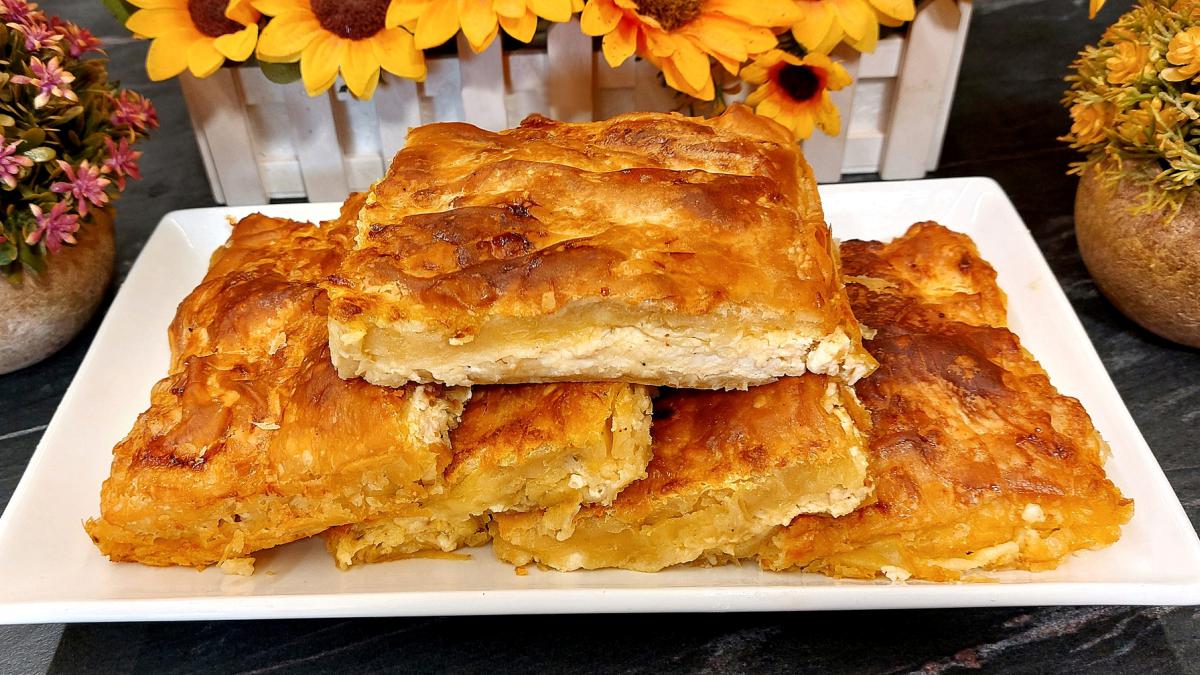

Greek Feta Cheese Pie with Rustic Phyllo and Creamy Filling
12
servings30
minutes1
hour495
kcal1
hour30
minutesA traditional Greek feta cheese pie made with rustic village-style phyllo, creamy yogurt, feta cheese, and eggs. Crispy on the outside, rich and juicy on the inside, and perfect for any meal of the day.
Ingredients
500 g 18 oz Rustic Phyllo Dough (1 package)
5 5 Eggs
250 g 1 cup Milk
200 g 3/4 cup Cream Cheese
200 g 3/4 cup Greek Yogurt
500 g 18 oz Feta Cheese, crumbled
Salt, to taste
Black Pepper, to taste
1 tsp 1 tsp Smoked Paprika
200 g 6/7 cup Olive Oil
1 tsp 1 tsp Thyme
How to make the Cheese Pie
- In a large bowl, combine 3 eggs and the yogurt. Mix well.
- Add the cream cheese and stir until incorporated.
- Season with salt and pepper. Add the thyme, smoked paprika, and approximately 50 g (¼ cup) olive oil. Mix well.
- Add the crumbled feta cheese, stir, and set the bowl aside.
- Grease a 25 x 35 cm (10 x 14 inch) baking pan with olive oil.
- Layer 3 sheets of rustic phyllo dough in the bottom of the pan, creating a nest shape. Drizzle olive oil between the sheets.
- Spread the cheese filling evenly over the phyllo.
- Fold the overhanging edges of the phyllo inward over the filling and drizzle with olive oil.
- Cut the remaining phyllo sheets in half.
- In the same bowl, whisk together the remaining 2 eggs and a little olive oil.
- Dip each phyllo sheet into the egg mixture one at a time and place it on top of the pie in a loose, crumpled arrangement.
- Pour the remaining egg mixture evenly over the pie and let it rest for 10 minutes.
- Cut into portions and drizzle with a little olive oil.
- Bake in a preheated oven at 350°F (180°C) using conventional top and bottom heat for approximately 50-60 minutes, or until beautifully golden brown.
Did you make this recipe?
Tag @georgezolis on Instagram and hashtag it with #georgezolis
Like this recipe?
Follow @gzoliskitchen on Pinterest
Γίνετε μέλος της Ομάδας μας
Ακολουθήστε τις Μαγειρικές Απολαύσεις στο Facebook
The Tiropita That Outshines Them All
Greece has a long and proud tradition of savory pies, and tiropita – feta cheese pie – sits at the very heart of that tradition. Every region, every family, and practically every Greek grandmother has their own version, and the debates about which approach produces the best result are endless. This recipe settles the argument decisively. A thick, rustic phyllo base cradles a filling so rich and juicy that it practically melts on the tongue, while the egg-dipped crinkled top creates a crust that shatters with every bite. It is, simply put, tiropita at its finest.
What makes this version stand out from the classic is the combination of three dairy elements in the filling – feta, yogurt, and cream cheese. Each plays a distinct role, and together they create something far greater than any one of them could achieve alone.
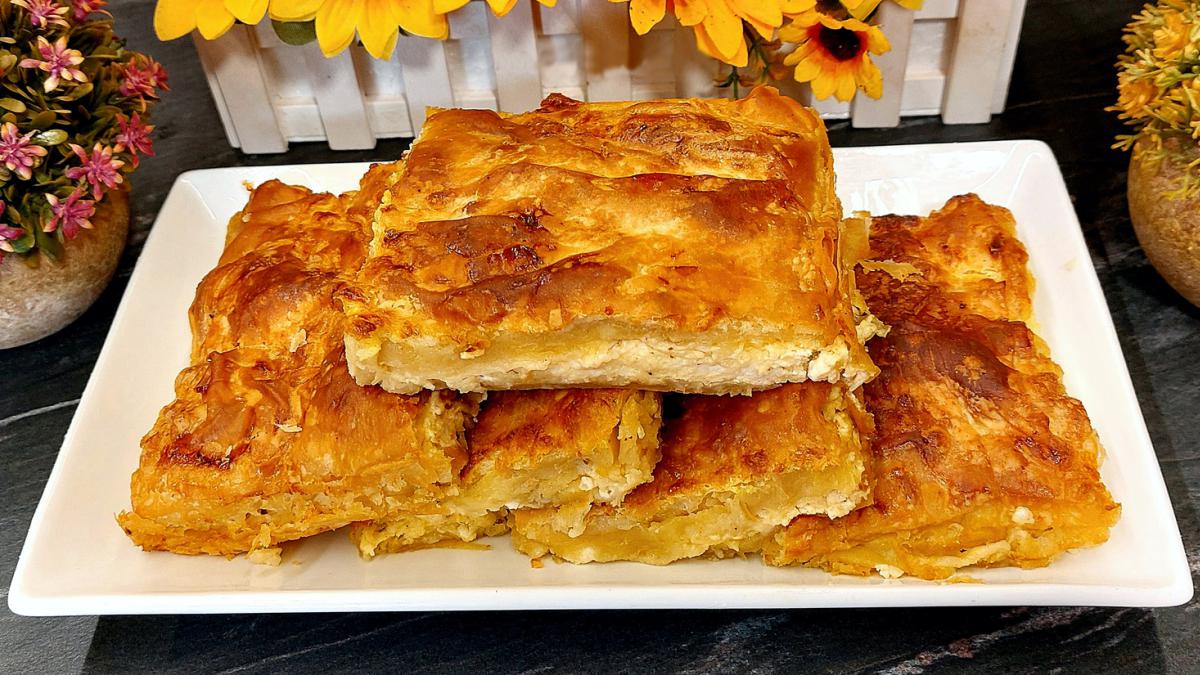
Why Three Dairy Elements Make a Better Filling
Most traditional tiropita recipes rely on feta alone or feta with eggs. This recipe goes further, and the result is noticeably more complex. The feta provides the bold, salty, tangy backbone that defines Greek cheese pie. The yogurt adds a gentle acidity and a silky, slightly loose texture that keeps the filling moist throughout baking. The cream cheese, listed as optional but highly recommended, brings a smooth, luxurious richness that rounds out the sharpness of the feta and binds the filling into a cohesive, sliceable layer.
The smoked paprika and thyme are not afterthoughts. The paprika adds warmth and a subtle smokiness that elevates the overall flavor profile, while the thyme contributes a herbal earthiness that is distinctly Mediterranean. Together they transform a straightforward cheese filling into something genuinely memorable.
Understanding Rustic Phyllo
The phyllo used in this recipe is horiatiko phyllo, which translates literally as “village-style phyllo.” It is significantly thicker and more substantial than the paper-thin phyllo sheets used in baklava or delicate pastries. Rustic phyllo has a more robust texture, a slightly chewier bite, and a sturdiness that allows it to absorb the egg mixture and olive oil without tearing or becoming soggy. It is the traditional choice for hearty savory pies and for good reason.
In the US, rustic or village-style phyllo can be found in Greek or Middle Eastern specialty grocery stores, or ordered online. If unavailable, standard phyllo dough with two sheets layered together for each single sheet called for in the recipe is a workable substitute. The result will be slightly more delicate but still delicious.
The Egg Dip Technique
One of the most distinctive steps in this recipe is dipping the top phyllo sheets individually in a beaten egg and olive oil mixture before arranging them over the pie. This technique serves multiple purposes. The egg coating seals and enriches each sheet, helping it develop a deeper golden color in the oven. The crinkled, irregular arrangement of the dipped sheets creates dramatic texture on the surface – peaks and valleys that catch the heat and crisp up beautifully while the lower portions remain slightly softer and more custardy.
Pouring the remaining egg mixture over the assembled top and allowing the pie to rest for 10 minutes before baking gives the egg time to soak partially into the layers, ensuring even color and flavor distribution throughout the topping.
Scoring Before Baking
The instruction to score the pie into portions before it goes into the oven is a practical and important step, not merely a suggestion. Cutting through the raw phyllo top before baking allows steam to escape from the filling as it bakes, preventing the top from bubbling up unevenly. It also means your portions are pre-defined and that the knife glides easily through the crispy baked crust rather than shattering it into unpredictable pieces when serving.
Serving and Pairing Suggestions
This pie is outstanding served warm, about 10 to 15 minutes out of the oven, when the filling is set but still slightly soft and the crust is at peak crispiness. It pairs beautifully with a simple Greek salad of tomatoes, cucumbers, olives, and red onion, or alongside a bowl of cold tzatziki for dipping. A glass of crisp white wine makes it a genuinely elegant meal.
At room temperature it is equally enjoyable and slices even more cleanly, making it an excellent choice for picnics, packed lunches, potlucks, and buffet tables. It holds its structure well and travels without falling apart.
Storage and Reheating
Store leftover pie covered in the refrigerator for up to 3 days. To reheat, place portions on a baking sheet in a 375°F (190°C) oven for 10 to 12 minutes to restore the crispiness of the top phyllo layer. Avoid the microwave for reheating as it softens the pastry significantly. This pie can also be frozen after baking – wrap individual portions tightly in plastic wrap and freeze for up to 6 weeks. Reheat from frozen in the oven, allowing an extra 10 minutes of baking time.
A Recipe Worth Passing Down
Some recipes are functional. Some are special. This Greek Feta Cheese Pie with Rustic Phyllo is both. Simple enough to make on a weeknight, impressive enough to serve at any table – it is the kind of recipe that becomes a household staple within a single baking and stays there for years.