


Prepare yourself for the baked eggplant dish that will ruin all others for you. Tender, smoky slices of roasted eggplant are layered into a nest, filled with a richly seasoned ground beef sauce of caramelized onions, sweet red peppers, garlic, tomato paste, and smoked paprika, then blanketed in a generous layer of melted graviera or parmesan and baked until golden and bubbling.
This is not a side dish. This is not a simple vegetable bake. This is a showstopping main course that combines the deep, meaty satisfaction of a Greek moussaka with the rustic elegance of a stuffed vegetable, all in one spectacular pan. Every single element – the silky eggplant, the savory meat sauce, the stretchy melted cheese – comes together into something that is genuinely greater than the sum of its parts.
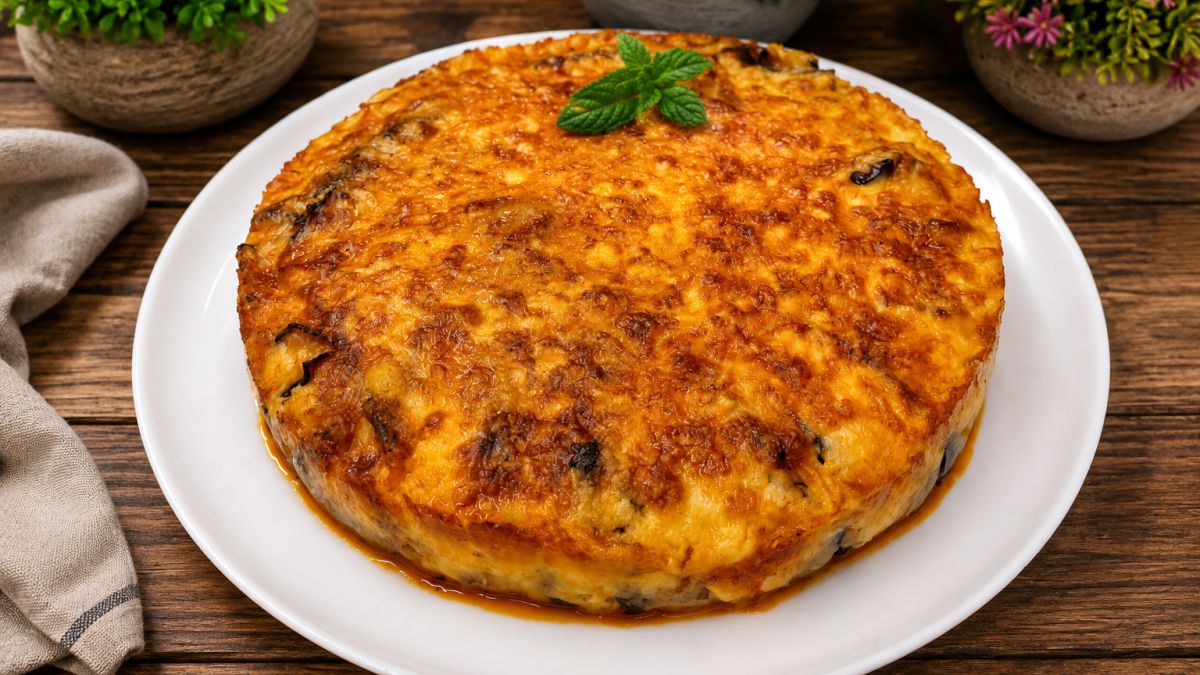

Baked Eggplant with Ground Beef and Cheese
8
servings30
minutes25
minutes520
kcal55
minutesRoasted eggplant filled with savory ground beef, peppers, onions, and melted cheese. A rich Mediterranean-style casserole that’s comforting, flavorful, and perfect for family dinners.
Ingredients
- For the Eggplant
2 liters 8 1/2 cups Water
2 tbsp 2 tbsp Salt
1.5 kg 3.3 lb Eggplants
50 g 3 1/2 tbsp Olive Oil
Thyme, to taste
Black Pepper, to taste
Smoked Paprika, to taste
- For the Beef Filling
100 g 3/7 cup Olive Oil
3 3 Large Onions, finely chopped
4 4 Garlic Cloves, finely chopped
1/2 bunch 1/2 bunch Parsley, finely chopped
2 2 Sweet Red Peppers, diced
Salt, to taste
Black Pepper, to taste
1 tbsp 1 tbsp Smoked Paprika
2 tbsp 2 tbsp Tomato Paste
500 g 18 oz Ground Beef
- Additional Ingredient
500 g 18 oz Melting Cheese, grated (Graviera, Parmesan, or similar)
How to make Baked Eggplant with Ground Beef
- Prepare the Eggplants
- In a large bowl, combine the water and salt.
- Remove the stems from the eggplants and slice them into approximately 1 cm (½-inch) thick slices.
- Place the slices in the salted water and let them soak for 20 minutes.
- Arrange the eggplant slices on a parchment-lined baking tray.
- Sprinkle with smoked paprika, thyme, and black pepper.
- Drizzle with olive oil.
- Bake at 400°F (200°C) using conventional top and bottom heat for approximately 30 minutes.
- Prepare the Beef Filling
- Place a large skillet over medium heat and add enough olive oil to lightly cover the bottom.
- Add the garlic, onions, and peppers and sauté until softened.
- Add the parsley and ground beef.
- Cook while stirring until the beef begins to brown.
- Add the smoked paprika, tomato paste, salt, and pepper.
- Continue sautéing for another 2 minutes.
- Add a small amount of water, approximately ½ cup.
- Stir, cover with a lid, reduce the heat to medium, and cook for 5 minutes.
- Assemble the Dish
- Arrange the roasted eggplants in a 26 cm (10-inch) round baking dish, creating a nest-like shape.
- Sprinkle a layer of grated cheese over the eggplants.
- Add the beef filling.
- Fold the eggplants inward over the filling.
- Top with the remaining grated cheese.
- Bake in a preheated oven at 400°F (200°C) using conventional top and bottom heat for approximately 25 minutes.
- Allow the dish to cool slightly before serving.
Did you make this recipe?
Tag @georgezolis on Instagram and hashtag it with #georgezolis
Like this recipe?
Follow @gzoliskitchen on Pinterest
Γίνετε μέλος της Ομάδας μας
Ακολουθήστε τις Μαγειρικές Απολαύσεις στο Facebook
A Baked Eggplant Dish That Lives Up to Its Name
Recipe titles that promise the world rarely deliver. This one does. Baked eggplant with ground beef and cheese is a dish that earns its superlative honestly – through a combination of technique, layering, and ingredient quality that produces a result far more impressive than the individual components would suggest. It is the kind of meal that silences the table, prompts requests for seconds, and gets asked about long after dinner is over.
What makes it work is the interplay of three distinct elements, each prepared separately and each at its best before they are combined: smoky, tender roasted eggplant that has been pre-seasoned and oven-baked to concentrate its flavor; a deeply savory ground beef sauce built on a caramelized base of onions, red pepper, garlic, and tomato paste; and a generous blanket of melted graviera or parmesan that ties everything together with richness and golden, bubbling texture.
Why Soaking the Eggplant Matters
Eggplant has a well-documented tendency toward bitterness, particularly in larger, more mature specimens. The traditional solution – and the one used here – is a 20-minute salt water soak before cooking. The salt draws out the bitter compounds through osmosis, leaving behind a milder, sweeter eggplant that absorbs other flavors more readily and cooks more evenly.
Beyond bitterness, the soak also serves a structural purpose. Soaked eggplant releases less water during roasting, which means the slices roast rather than steam in the oven, developing a more concentrated flavor and a firmer texture that holds up better when assembled and baked a second time. Do not skip this step — the difference in the finished dish is significant.
Building the Flavor Base of the Meat Sauce
The meat sauce in this recipe is not a simple bolognese. It is built in a specific sequence that maximizes flavor at every stage. Starting with the onions, garlic, and red peppers and sautéing them until they are genuinely caramelized – not just softened, but golden and sweet – creates a flavor foundation that transforms the entire sauce.
Adding the tomato paste and smoked paprika directly to the sautéed vegetables before any liquid is added is a blooming technique that extracts and intensifies the fat-soluble flavor compounds in both ingredients. The paste caramelizes slightly in the hot oil, deepening from raw tomato into something richer and more complex. The smoked paprika blooms into the oil, releasing its characteristic warmth and color throughout the sauce.
The brief final simmer with water is not about cooking the meat through – the ground beef is already browned by this point. It is about bringing the sauce together, allowing all the flavors to meld and the liquid to reduce into a cohesive, saucy consistency that will not make the eggplant nest soggy when assembled.
The Nest Assembly Technique
The assembly of this dish is what elevates it visually from a simple casserole to something genuinely spectacular. Overlapping the eggplant slices around the perimeter of a round pan to form a nest serves both an aesthetic and a practical purpose. Aesthetically, it creates a beautiful presentation – the golden eggplant edges frame the bubbling cheese and meat filling like a natural border. Practically, it allows you to fold the eggplant slices inward after adding the filling, partially enclosing the meat sauce and creating a layered, self-contained structure.
Using a 26 cm (10 inch) round pan is the right size for this quantity of ingredients. A pan that is too large will spread the filling too thin; one that is too small will overflow.
Choosing the Right Cheese
The cheese choice here is deliberate and important. Graviera is a Greek hard cheese with a rich, slightly nutty, faintly sweet flavor that melts beautifully into golden, bubbly pools. It is the traditional choice for this style of dish and provides a distinctly Greek flavor profile that complements the smoked paprika and eggplant perfectly.
Parmesan is an excellent substitute that is more widely available and provides a similar salty, nutty richness with outstanding melting properties. For the most impressive result, use a combination of both – the graviera for flavor and the parmesan for its extraordinary browning and crisping qualities on the surface.
In the US, graviera is available at Greek or Middle Eastern specialty stores, Whole Foods, and online. If unavailable, a combination of gruyere and parmesan is the closest equivalent in both flavor and texture.
Serving Suggestions and Pairings
This dish is substantial enough to serve as a complete main course with nothing more than a simple green salad alongside. The richness of the meat sauce and the cheese calls for something fresh and acidic to balance it – a classic Greek salad of tomatoes, cucumbers, olives, and feta is ideal, as is a simple arugula salad dressed with lemon and olive oil.
Allow the dish to rest for at least 5 minutes before cutting and serving. This brief resting period allows the molten cheese to firm up slightly, making the portions much easier to serve cleanly. Crusty bread is highly recommended for mopping up the pan juices.
Storage and Reheating
Leftovers keep well covered in the refrigerator for up to 3 days and are arguably even better the following day, once the flavors have had time to deepen and meld. Reheat individual portions in a preheated oven at 375°F (190°C) for 12 to 15 minutes until heated through and the cheese has re-melted and crisped. The microwave will work in a pinch but will soften the cheese rather than re-crisp it.
This dish also freezes well after baking for up to 2 months. Portion before freezing for easy individual reheating.