


These individual chocolate-filled tsoureki rolls are soft, fluffy, and wonderfully aromatic, with a rich milk chocolate filling. Flavored with traditional mahlepi, mastiha, orange zest, and vanilla, they’re perfect for breakfast, school lunchboxes, work, or a homemade sweet snack.
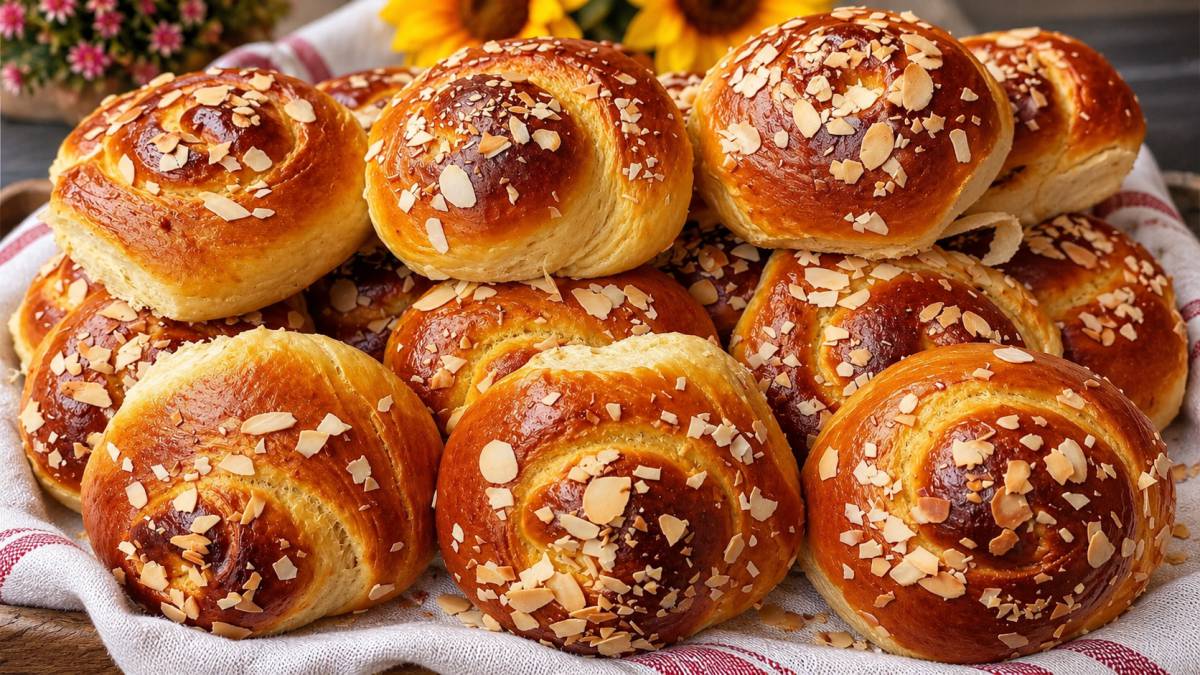

Chocolate-Filled Tsoureki Rolls
21
pieces35
minutes25
minutes450
kcal1
hourSoft and fluffy individual Greek tsoureki rolls filled with milk chocolate and flavored with mahlepi, mastiha, vanilla, and orange zest.
Ingredients
- For the Tsoureki Dough
1 kg 8 – 8 1/3 cups Bread Flour
300 g 1 1/2 cups Granulated Sugar
100 g 3.5 oz Fresh Yeast (or 4 packets dry yeast)
350 g 1 1/2 cups Milk
200 g 7 oz Unsalted Butter, softened
3 3 Large Eggs
1 pinch 1 pinch Salt
Zest of 1 Orange
22 g .8 oz Ground Mahlepi
2-3 2-3 Mastic tears, finely ground
2 2 Vanilla powder capsules
300 g 10.6 oz Milk Chocolate, broken into small pieces
- For the Egg Wash
1 1 Large Egg
30 ml 2 tbsp Water
1 pinch 1 pinch Salt
Sliced Almonds or Sesame Seeds (optional)
Recipe directions
- In the bowl of a stand mixer, combine 20 g of the sugar, 350 g milk, 100 g fresh yeast, and 5 tablespoons of flour taken from the total 1 kg.
- Mix until combined and let the mixture stand for 10 minutes to activate the yeast.
- Add the remaining 280 g sugar, mahlepi, finely ground mastiha, vanilla, orange zest, eggs, the remaining flour, and a pinch of salt.
- Knead using the dough hook on low speed for 4–5 minutes, or knead by hand for approximately 6-7 minutes, until a firm dough forms.
- Cut the softened butter into small pieces and add it to the dough.
- Continue kneading on low speed for another 2-3 minutes, until the butter is incorporated.
- Cover the bowl with a clean kitchen towel and leave the dough in a warm place for approximately 40 minutes, allowing it to rise.
- Transfer the risen dough to your work surface and knead it briefly to release the excess air.
- Divide the dough into portions weighing approximately 100 g each. You should have around 21 dough balls.
- Stretch or roll each dough ball into a strip approximately 30 cm / 12 inches long.
- Break the milk chocolate into small pieces and distribute a little chocolate along the length of each strip.
- Fold the dough over the chocolate and pinch the edges firmly together to seal the filling inside.
- Roll each filled strip into a spiral, similar to a snail shell.
- Tuck the end underneath to help the roll hold its shape during baking.
- Place the shaped rolls on baking sheets lined with parchment paper, leaving some space between them.
- Leave the rolls in a warm place for approximately 25 minutes to rise again.
- Apply the Egg Wash
- In a small bowl, beat the egg with the water and a pinch of salt.
- Gently brush the surface of each roll with the egg wash.
- If desired, sprinkle with sliced almonds or sesame seeds.
- Bake
- Bake in a preheated oven at 160°C / 320°F using conventional top-and-bottom heat for approximately 20-25 minutes, until the tsoureki rolls are golden and baked through.
- Allow them to cool slightly before serving.
Recipe video
Did you make this recipe?
Tag @georgezolis on Instagram and hashtag it with #georgezolis
Like this recipe?
Follow @gzoliskitchen on Pinterest
Γίνετε μέλος της Ομάδας μας
Ακολουθήστε τις Μαγειρικές Απολαύσεις στο Facebook
How to Make Soft and Fluffy Tsoureki
The texture of tsoureki depends on several factors, including kneading, proofing, and baking.
Use strong bread flour or flour specifically intended for tsoureki, as it provides the gluten-forming proteins needed for an elastic dough.
Avoid adding extra flour unnecessarily during kneading, since too much flour can make the finished rolls dense.
The dough also needs sufficient time to rise.
The original recipe specifies 40 minutes for the first rise and 25 minutes for the second, but the exact time may vary depending on the temperature of your kitchen.
If the room is cool, the dough may require additional time to expand adequately.
How to Keep the Chocolate Filling Inside
Each portion of dough is stretched into a long strip before the chocolate is added.
The chocolate should be distributed along the center of the strip rather than concentrated in one spot.
Once filled, bring the edges together and seal them firmly.
A secure seam helps prevent melted chocolate from leaking during baking.
After sealing, roll the strip into a spiral and tuck the end underneath.
This simple shaping technique gives the individual tsoureki rolls their distinctive appearance.
Can You Use Dark Chocolate Instead?
The original recipe uses milk chocolate, which gives the filling a sweet and creamy flavor.
However, dark or semisweet chocolate can also be used if you prefer a more intense chocolate taste.
Chocolate chips are another practical alternative to chopped chocolate, although the final filling texture may differ depending on the product.
Why Do the Rolls Need a Second Rise?
The first rise allows the dough to develop volume before shaping.
Once the dough is divided, stretched, filled, and rolled, some of that volume is lost.
The second rise allows the shaped rolls to expand again before entering the oven.
This helps produce a softer, lighter finished bread.
When applying the egg wash, brush gently so you don’t deflate the risen dough.
How to Store Homemade Tsoureki
Once completely cooled, store the rolls in an airtight container or wrap them individually to help prevent them from drying out.
For longer storage, freeze the rolls in freezer-safe packaging.
Their individual size makes them especially convenient for freezing, since you can remove only the number of rolls you need.
Thaw at room temperature before serving.