


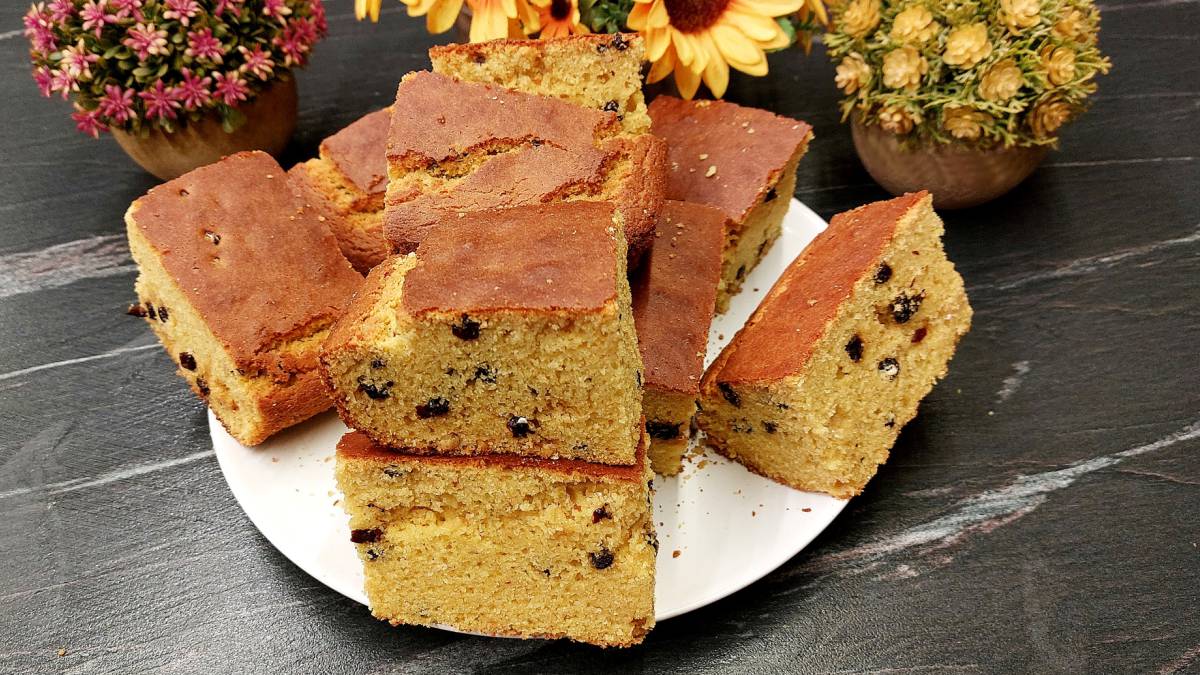
This Sweet Cornmeal Cake with Raisins is a beloved Greek classic known as Bobota – a humble, wholesome bake that has been gracing Greek family tables for generations. Made with cornmeal, fine semolina, yogurt, and plump black raisins, it has a wonderfully dense yet tender crumb with a slightly grainy texture that is completely unique and utterly addictive.
No mixer required – just two bowls, a whisk, and about 10 minutes of hands-on time. It is naturally rustic, lightly sweet, and deeply satisfying, equally at home as a morning slice with coffee, an afternoon snack, or a simple dessert. If you have never tried Greek bobota before, this recipe is the perfect introduction to one of the most comforting bakes in the Mediterranean repertoire.
)
Sweet Greek Cornmeal Cake with Raisins (Bobota)
16
servings10
minutes50
minutes345
kcal1
hourA moist and flavorful Greek Bobota Cake made with cornmeal, semolina, yogurt, butter, and raisins. This easy no-mixer recipe is perfect for breakfast, snacks, or dessert.
Ingredients
240 g 1 cup Sugar
5 5 Eggs
1 pinch 1 pinch Salt
500 g 2 cups Milk, lukewarm
150 g 3/4 cup Butter, melted
150 g 1 1/4 cups All-purpose Flour
20 g 3 tsp Baking Powder
600 g 4 cups Cornmeal
200 g 1 cup Fine Semolina
200 g 3/4 cup Yogurt
1 tsp 1 tsp Baking Soda
Juice of 1/2 Lemon
2 tsp 2 tsp Vanilla Extract
200 g 1 1/3 cups Black Raisins
How to make Cornmeal Cake
- Butter a 25 x 37 cm (10 x 15 inch) baking pan and set aside.
- In a large bowl, whisk together the sugar and eggs until combined.
- Add the warm milk and yogurt and mix well.
- Add the salt, vanilla, and melted butter. Stir until incorporated.
- In a separate bowl, toss the raisins with 3 teaspoons of flour and set aside.
- In another bowl, combine the flour and baking powder. Add them to the wet ingredients and mix lightly.
- Mix the baking soda with the lemon juice and add it to the batter.
- Whisk the mixture thoroughly until smooth.
- Gradually add the cornmeal while continuously stirring.
- Add the fine semolina and mix well. Let the mixture rest for 10 minutes.
- Fold in the raisins using a spatula.
- Transfer the batter to the prepared baking pan and spread evenly.
- Bake in a preheated oven at 350°F (180°C) using conventional top and bottom heat for 45–50 minutes.
- Allow the cake to cool before slicing and serving.
Did you make this recipe?
Tag @georgezolis on Instagram and hashtag it with #georgezolis
Like this recipe?
Follow @gzoliskitchen on Pinterest
Γίνετε μέλος της Ομάδας μας
Ακολουθήστε τις Μαγειρικές Απολαύσεις στο Facebook
What Is Bobota and Why You Need to Try It
Bobota is one of those recipes that carries history in every bite. A staple of Greek rural cooking, it was traditionally made during lean times when wheat flour was scarce and cornmeal was plentiful. Over generations it evolved from a plain, austere cornbread into the sweet, enriched, raisin-studded cake it is today. Every Greek region and every Greek family has its own version, but the soul of the recipe remains the same: simple ingredients, honest flavor, and a texture that is completely unlike anything else in the baking world.
This version is particularly generous – enriched with yogurt for tenderness, fine semolina for body, and a full 200 grams of plump black raisins that add sweetness and chew throughout every slice. It is the kind of cake that improves slightly the day after baking, as the flavors deepen and the texture settles into something even more satisfying.
The Role of Each Ingredient
Understanding why each ingredient is here makes you a better baker and helps you adapt the recipe with confidence.
Cornmeal is the soul of bobota. It gives the cake its characteristic dense, slightly grainy crumb and its warm golden color. Fine or medium grind cornmeal both work well here – fine grind produces a slightly smoother texture, while medium grind gives a more rustic, toothsome bite.
Fine semolina works alongside the cornmeal to add structure and a subtle nuttiness. It also absorbs moisture during the 10-minute resting period, which is why that rest is important: it allows the semolina and cornmeal to hydrate fully before baking, resulting in a more cohesive, evenly textured cake.
Yogurt is the secret to the tenderness of this cake. The natural acidity in yogurt reacts with the baking soda to create lift, and its fat content keeps the crumb moist long after baking. Full-fat Greek yogurt is the ideal choice for maximum richness.
Baking soda activated with lemon juice provides an additional lift beyond what the baking powder alone delivers. The fizzing reaction releases carbon dioxide instantly, so it is important to add it to the batter and stir right away rather than letting it sit.
Why You Coat the Raisins in Flour
Tossing the raisins in a little flour before folding them into the batter is a small step with a big impact. Without the flour coating, raisins tend to sink to the bottom of the batter during baking, concentrating all the fruit in one layer. The light flour coating creates a slightly rough surface that grips the batter and keeps the raisins suspended throughout the cake, so every slice gets an even distribution of fruit.
Texture Expectations and Serving Ideas
Bobota has a texture that surprises people who are expecting a standard butter cake. It is denser and more substantial, with a slightly coarse crumb from the cornmeal and semolina and a chewiness from the raisins. It does not have the airy softness of a sponge cake, and that is entirely intentional. Think of it as somewhere between a classic American cornbread and a fruit-studded tea cake.
It is wonderful served at room temperature, cut into squares, with a cup of strong Greek coffee or tea. A light dusting of powdered sugar on top adds a touch of elegance if serving to guests. For a more indulgent option, a dollop of thick Greek yogurt on the side balances the sweetness beautifully.
Storage Tips
Bobota keeps exceptionally well, which makes it a great make-ahead bake. Store it covered at room temperature for up to 3 days, or refrigerate for up to 5 days. It also freezes beautifully – cut into individual portions, wrap each one tightly in plastic wrap, and freeze for up to 2 months. Thaw at room temperature for an hour before serving. Many people find it tastes even better on day two, once the flavors have had time to meld and deepen.
A Timeless Greek Bake for Modern Kitchens
What makes bobota enduringly relevant is not just its flavor but its practicality. No mixer, no special equipment, no complicated techniques. Just a whisk, two bowls, and pantry staples that most home kitchens already stock. In a world of elaborate baking projects and lengthy ingredient lists, there is something deeply satisfying about a recipe this straightforward producing something this good. Make it once and you will understand exactly why generations of Greek families have kept it in their repertoire.