


This Braised Cauliflower with Potatoes and Carrots in Tomato Sauce – known in Greece as Kapama – is the kind of deeply comforting, oven-finished vegetable dish that makes you forget you are eating something entirely plant-based.
Tender cauliflower florets, chunky potatoes, and sweet carrots are first par-boiled until just softened, then blanketed in a rich, garlicky tomato sauce built with smoked paprika, tomato paste, and fresh parsley, and roasted in the oven until everything is deeply caramelized and the sauce has thickened into something truly spectacular. It is hearty, wholesome, and full of bold Mediterranean flavor – a classic Greek Sunday dish that belongs on every table, vegetarian or not.
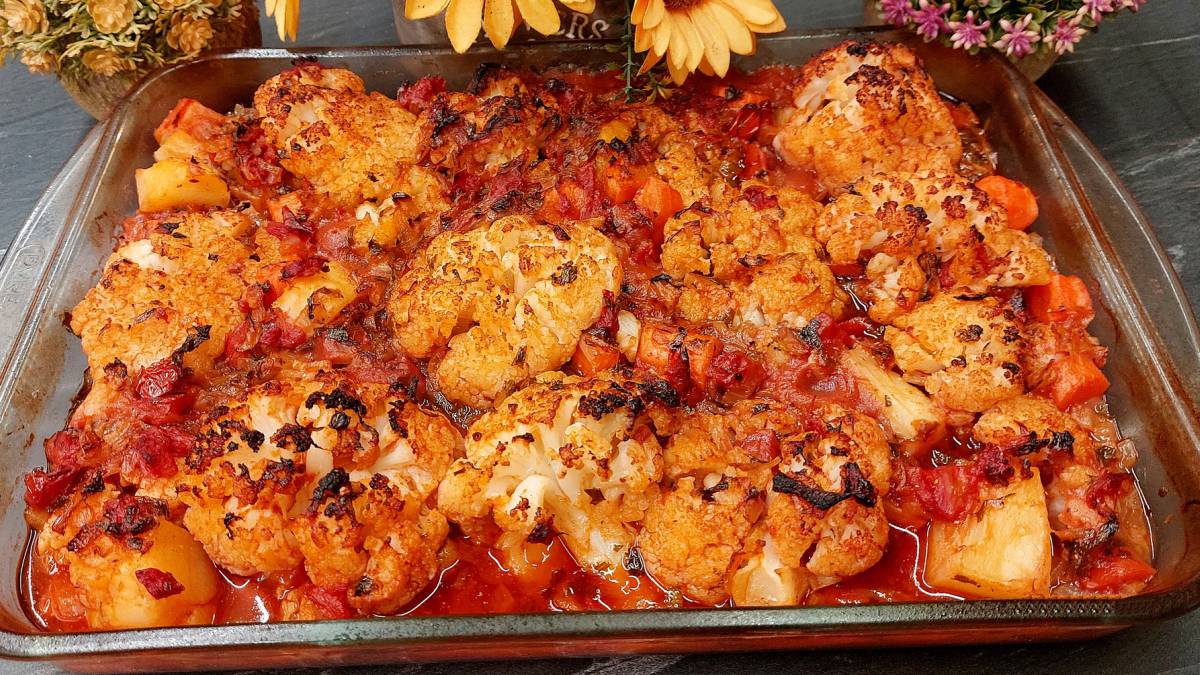

Greek Braised Cauliflower with Potatoes and Carrots in Rich Tomato Sauce
6
servings30
minutes50
minutes255
kcal1
hour20
minutesTender cauliflower, potatoes, and carrots baked in a rich Greek tomato sauce with olive oil, garlic, onion, paprika, and parsley. A traditional Mediterranean comfort food recipe.
Ingredients
- Vegetables
1 1 Cauliflower (about 1 kg / 2.2 lb)
2 2 Potatoes
3 3 Carrots
2 liters 8 1/2 cups Water
Salt
- Tomato Sauce
1 1 Onion, finely chopped
3-4 3-4 Garlic Cloves, finely chopped
2 tbsp 2 tbsp Tomato Paste
1 can 1 can Crushed Tomatoes (400 g / 14 oz)
100 g 1/3 cup Olive Oil
500 ml 2 cups Water
Salt, to taste
Black Pepper, to taste
1 tbsp 1 tbsp Smoked Paprika
1/2 bunch 1/2 bunch Fresh Parsley, finely chopped
Recipe directions
- Prepare the Vegetables
- Add the water and salt to a large pot.
- Cut the carrots and potatoes into large chunks and place them in the pot.
- Remove the stem from the cauliflower, cut it into florets, and add it to the pot.
- Place the pot over medium-high heat and boil the vegetables for approximately 20 minutes, until slightly tender.
- Prepare the Tomato Sauce
- Place a saucepan or deep skillet over medium heat and add enough olive oil to cover the bottom.
- Add the chopped onion and garlic and sauté until softened.
- Add the paprika and stir.
- Add the tomato paste and stir well. Cook for another minute.
- Add the crushed tomatoes and 2 cups of water.
- Add the parsley, salt, and pepper.
- Stir well and simmer for approximately 15 minutes, until the sauce slightly thickens.
- Assemble and Bake
- Transfer the boiled vegetables to a baking dish.
- Pour the tomato sauce evenly over the vegetables.
- Bake in a preheated oven at 400°F (200°C) using conventional top and bottom heat for approximately 40–50 minutes.
- Serve warm.
Did you make this recipe?
Tag @georgezolis on Instagram and hashtag it with #georgezolis
Like this recipe?
Follow @gzoliskitchen on Pinterest
Γίνετε μέλος της Ομάδας μας
Ακολουθήστε τις Μαγειρικές Απολαύσεις στο Facebook
The Beauty of Greek Kapama
In Greek home cooking, kapama refers to a style of braising where ingredients are cooked low and slow in a rich tomato sauce until deeply tender and the sauce has reduced into something thick, glossy, and intensely flavored. The word itself has Ottoman roots, a reminder of the layered culinary history that shapes Greek cuisine to this day. The technique works beautifully with meat, but it is arguably at its most elegant with vegetables, where the natural sweetness of cauliflower, carrots, and potatoes has room to shine without competition.
This particular combination — cauliflower, potato, and carrot — is a classic of Greek home kitchens, especially during the winter months when these vegetables are at their best and heartiest meals feel most welcome. It is the kind of dish that fills the house with an incredible aroma as it bakes, drawing everyone to the kitchen long before it is ready to serve.
Why Par-Boiling Before Roasting Matters
The two-stage cooking method in this recipe – par-boiling the vegetables first, then roasting them in the tomato sauce — is not an extra step for the sake of it. Each stage does something that the other cannot.
Par-boiling gets the vegetables to the point of tenderness in a controlled, gentle way, ensuring that the dense cauliflower stems and chunky potato pieces are fully cooked through by the time they go into the oven. Roasting them raw in tomato sauce would require a much longer baking time and risks leaving the centers undercooked while the edges dry out.
The oven stage then does what boiling cannot: it caramelizes the surface of the vegetables, develops deep color and roasted flavor, reduces the sauce to a rich, concentrated coating, and melds all the individual elements into a cohesive, unified dish. The par-boiled vegetables absorb the tomato sauce as they roast, taking on its color and flavor all the way through.
Building the Tomato Sauce
The sauce in this recipe is a classic Greek tomato base, built in layers for maximum depth of flavor. Starting with onion and garlic sautéed until golden creates a sweet, caramelized foundation. The smoked paprika goes in next and is stirred directly into the hot oil — a technique called blooming, which activates and intensifies the spice’s flavor compounds before any liquid is added.
The tomato paste is the next critical layer. By sautéing it in the oil for a full minute before adding the canned tomatoes, you are cooking out the raw, slightly acidic edge and developing a deeper, more complex tomato flavor. The final addition of canned crushed tomatoes and water creates a sauce that is rich but fluid enough to spread over the vegetables and penetrate them as they roast.
Fresh parsley added to the simmering sauce brings brightness and color that survives the 15-minute reduction and the subsequent oven bake, contributing a clean herbal note to the finished dish.
Smoked Paprika in Greek Cooking
Traditional Greek kapama recipes often use sweet paprika, but smoked paprika has become increasingly popular in modern Greek home cooking for very good reason. The smokiness adds a dimension of flavor that suggests depth and complexity without adding any additional ingredients. It pairs particularly well with the natural sweetness of cauliflower and carrots, and it gives the sauce a beautiful deep red-orange color that makes the finished dish look as good as it tastes.
If you prefer a milder flavor profile, sweet paprika is a perfectly valid substitute. For those who enjoy a little heat, a pinch of hot paprika alongside the smoked variety adds a pleasant warmth.
Serving Suggestions
This dish is satisfying enough to serve as a complete vegetarian main course, accompanied simply by crusty bread to mop up the rich tomato sauce. It also works beautifully as a hearty side dish alongside grilled or roasted meat, particularly lamb or chicken.
A crumble of feta cheese over the top before serving is a wonderful addition that adds saltiness and creaminess. A drizzle of good extra-virgin olive oil just before serving brightens all the flavors and adds a finishing richness. Fresh parsley scattered over the top at the table keeps the presentation lively and fresh.
Storage and Reheating
This dish keeps and reheats exceptionally well, which makes it ideal for meal prep. Store leftovers in an airtight container in the refrigerator for up to 4 days. The flavors actually deepen and improve overnight, making the day-after portion often better than the original serving.
Reheat gently in a saucepan over low heat with a splash of water to loosen the sauce, or covered in the oven at 350°F (175°C) for 15 to 20 minutes. It also freezes well for up to 2 months – the texture of the cauliflower softens slightly after freezing but the flavor remains excellent.
A Dish That Proves Vegetables Are Never Boring
Greek vegetable dishes have a long tradition of being genuinely satisfying rather than merely acceptable. The combination of good olive oil, fresh garlic, tomato, and patience transforms simple, inexpensive vegetables into a meal that is bold, complex, and deeply nourishing. This cauliflower kapama is a perfect example of that tradition – and a reminder that the most satisfying cooking is often the simplest.