


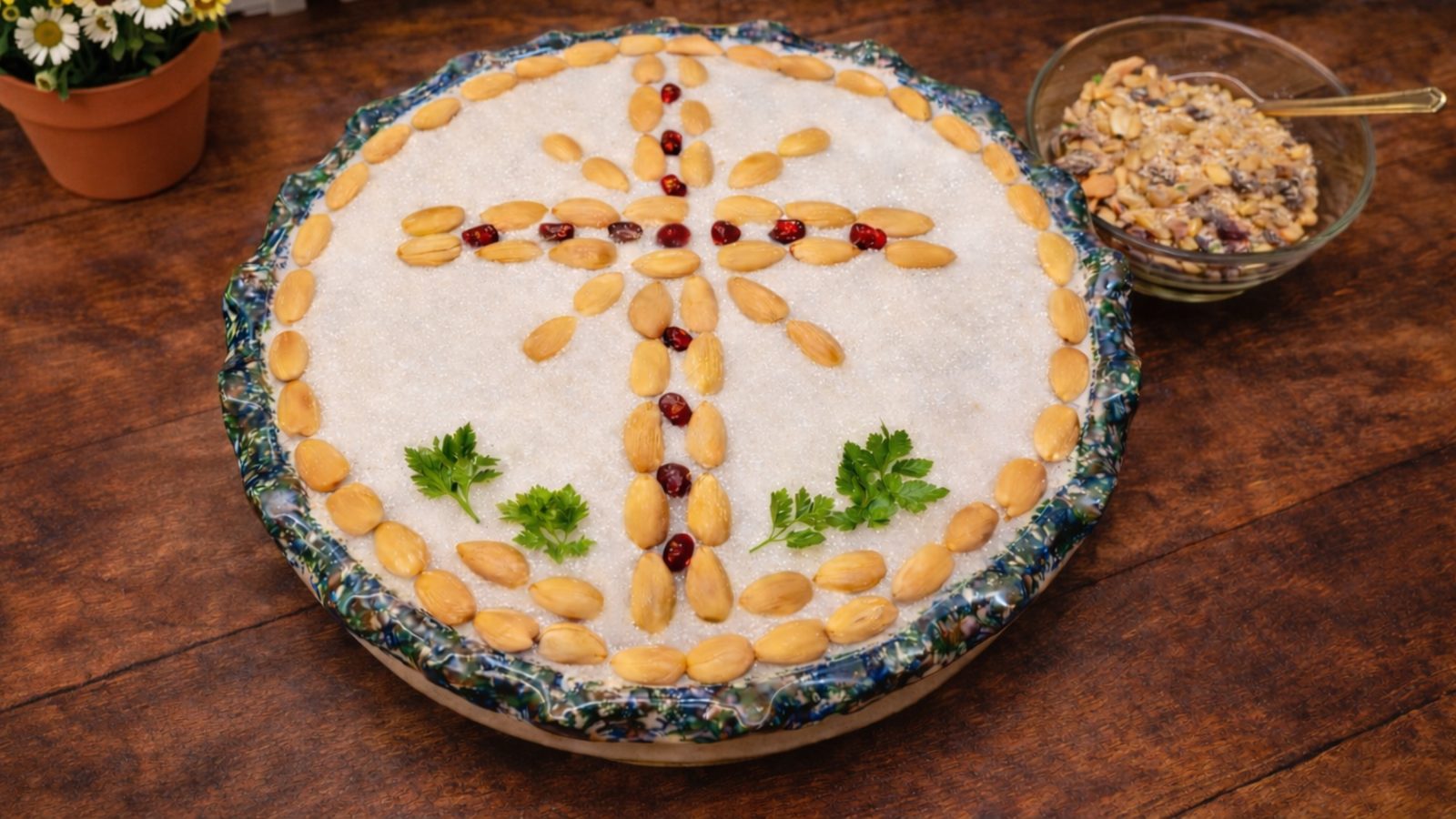
Koliva is a traditional Greek memorial wheat dish prepared for religious services and commemorations. Made primarily with boiled wheat, nuts, spices, dried fruit, and topped with sugar, it carries deep cultural and symbolic meaning in Greek Orthodox tradition.
While the ingredient list is simple, preparing koliva correctly requires attention to technique. The most common mistake is ending up with a wet, heavy mixture. In this guide, you’ll learn how to make koliva properly and the crucial secret that keeps the mixture light, fluffy, and never mushy.
%20–%20The%20Secret%20to%20Keeping%20It%20Fluffy)
Koliva (Greek Memorial Wheat Dessert) – The Secret to Keeping It Fluffy
12
servings30
minutes40
minutes380
kcal1
hour10
minutesTraditional Greek koliva made with boiled wheat, nuts, raisins, spices, and sugar. Includes the essential technique to prevent a mushy texture.
Ingredients
300 g 10.5 oz Wheat Berries
100 g 3/4 cup All-purpose Flour
100 g 3.5 oz Shredded Coconut
100 g 3.5 oz Sesame Seeds
100 g 3.5 oz Walnuts
100 g 3.5 oz Roasted Chickpeas
200 g 7 oz Blanched Almonds
1 tbsp 1 tbsp Cinnamon Powder
1/2 tsp 1/2 tsp Ground Cloves
Seeds from 1 Pomegranate
150 g 5.3 oz Raisins (black & blonde mix)
1/2 bunch 1/2 bunch Fresh Parsley, finely chopped
300 g 1 1/2 cups Sugar
How to make Koliva
- Wash the wheat thoroughly and soak it in 1 liter (4 cups) of water for 12 hours.
- Drain and boil it with 1 liter (4 cups) of water and a little salt for about 40 minutes.
- Drain well and spread the wheat on a clean towel for at least 4 hours, until completely dry.
- Toast at 320°F (160°C) for 7 minutes the walnuts, roasted chickpeas, sesame seeds, and almonds.
- In a pan over low heat, toast the flour for about 5 minutes until it changes color slightly.
- Grind the roasted chickpeas into a fine powder.
- In a large bowl, combine the completely dry wheat, the chickpea powder, and the toasted flour.
- Coarsely chop the walnuts and almonds (reserve some for decoration) and add them.
- Add shredded coconut, sesame seeds, pomegranate seeds, raisins, parsley, cinnamon, and cloves.
- Transfer to a serving platter, cover evenly with sugar, and decorate as desired.
Recipe video
Did you make this recipe?
Tag @georgezolis on Instagram and hashtag it with #georgezolis
Like this recipe?
Follow @gzoliskitchen on Pinterest
Γίνετε μέλος της Ομάδας μας
Ακολουθήστε τις Μαγειρικές Απολαύσεις στο Facebook
The Secret to Prevent Mushy Koliva
Why Texture Matters
The most critical step is not the boiling — it’s the drying process.
The wheat must be completely dry, with absolutely no residual moisture. Even slight dampness will create condensation and cause the mixture to become heavy and sticky.
The Protective Technique
After drying, the wheat is mixed with:
- Ground roasted chickpeas
- Toasted flour
These ingredients act as a natural moisture barrier. They absorb any remaining humidity and keep the koliva grainy, stable, and beautifully fluffy.
This is the true key to success.
What Is Koliva?
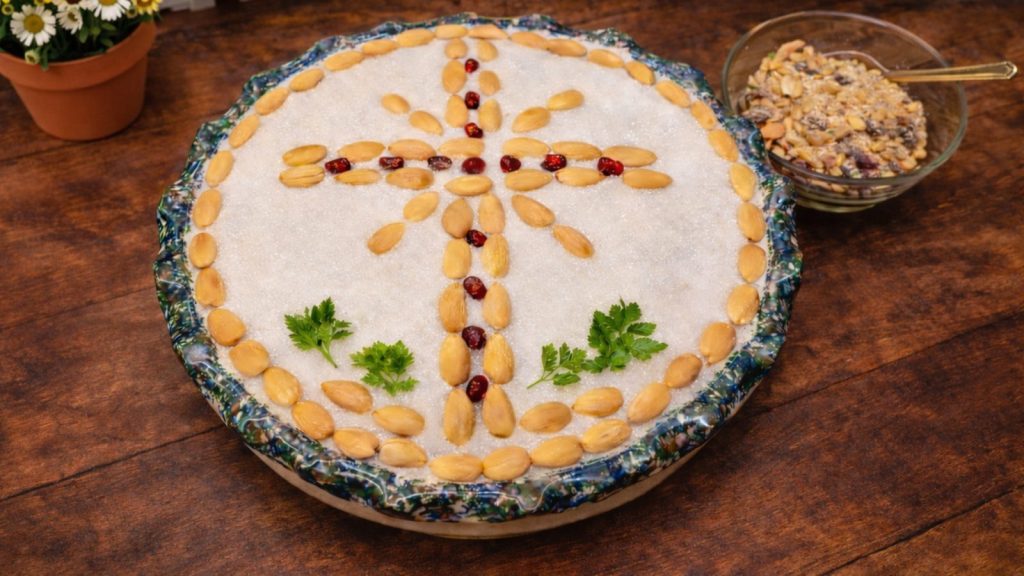
Koliva is a symbolic Greek Orthodox dish prepared for memorial services. Wheat represents resurrection and continuity of life, while sugar symbolizes sweetness and hope.
Proper Wheat Preparation
Soaking softens the wheat, but proper boiling ensures tenderness without overcooking. However, the drying stage determines the final texture. Skipping adequate drying time almost always results in mushy koliva.
Toasting Enhances Flavor
Lightly toasting nuts, sesame, and flour deepens the flavor and improves structure. Grinding the roasted chickpeas into powder creates the signature light texture.
Storage Tips
Koliva should be stored in a cool environment and assembled close to serving time. Excess moisture from refrigeration can affect the sugar topping.
Nutrition Facts
12 servings per container
Calories380
- Amount Per Serving% Daily Value *
- Total Fat
14g
18%
- Saturated Fat 2g 10%
- Sodium 40mg 2%
- Amount Per Serving% Daily Value *
- Total Carbohydrate
58g
22%
- Dietary Fiber 7g 25%
- Total Sugars 28g
- Protein 9g 18%
* The % Daily Value tells you how much a nutrient in a serving of food contributes to a daily diet. 2,000 calories a day is used for general nutrition advice.